At the end of 2024, journalist Isa Russchenberg interviewed me about my late autism diagnosis. I translated her piece for my weblog.
Two BudoGirls in Conversation: On Late Diagnosis, Resilience, and Systems of Care
As two proud BudoGirls, Isa and I had so much to talk about—both of us passionate about martial arts and resilience in its many forms. When Isa, who is not only a fellow martial artist but also a gifted journalist, invited me to take part in this interview about autism, I felt truly honoured. The article was originally written in Dutch, and I’m happy to now share it here in my own English translation for my international readers. I hope it brings recognition, hope, and maybe a sense of sisterhood to anyone walking a similar path.
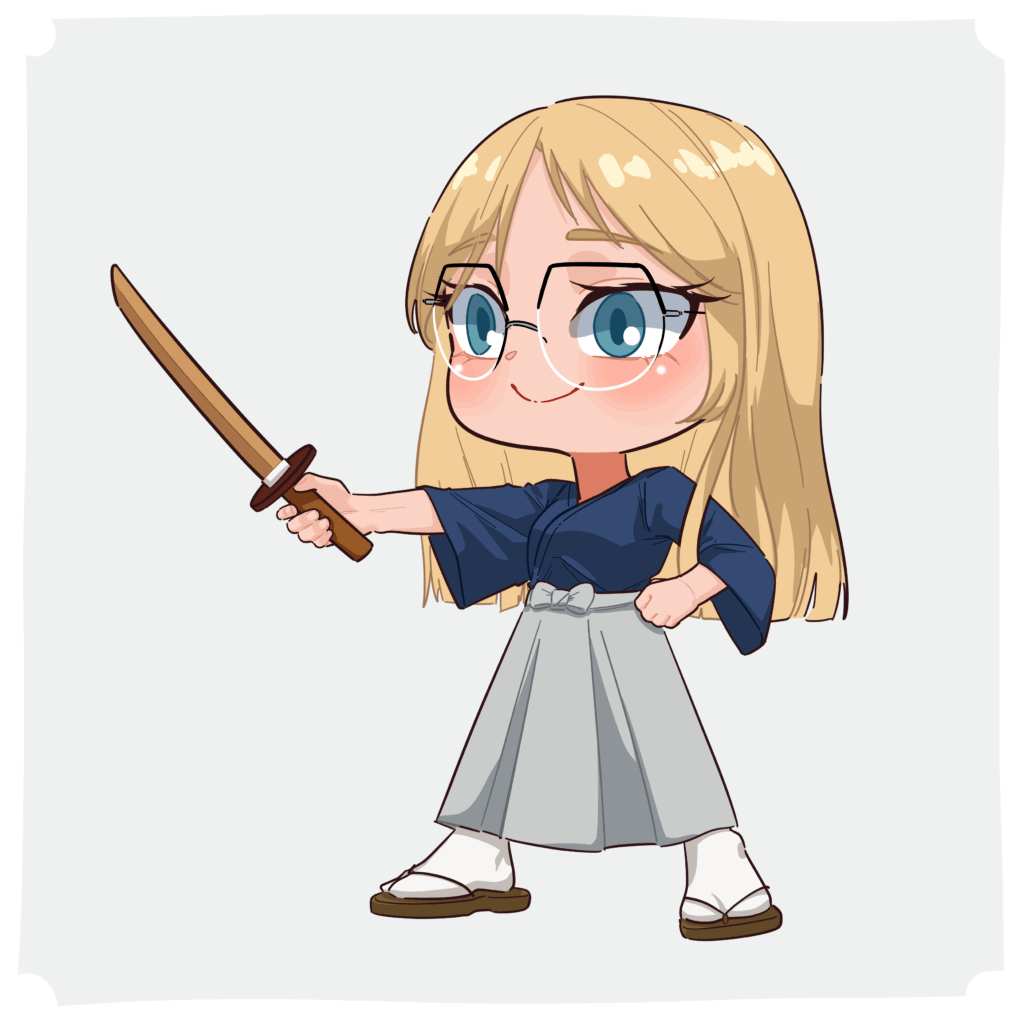
Martine Embraces Her Late Autism Diagnosis:
“I’ve built up so much resilience—perhaps I wouldn’t have, had I been diagnosed as a child.”
by Isa Russchenberg
Around half of autistic women receive their diagnosis later in life, or are first misdiagnosed with something entirely inaccurate. For these women, it can be especially difficult to find a place in society, as they often feel “different”. This sense of disconnection can deeply affect their mental health and overall wellbeing. One of these women is Martine Mussies, who was misdiagnosed for years and only received her autism diagnosis as an adult. “Without structure, there’s no system—and then there’s simply too much to think about. That’s when I overflow.”
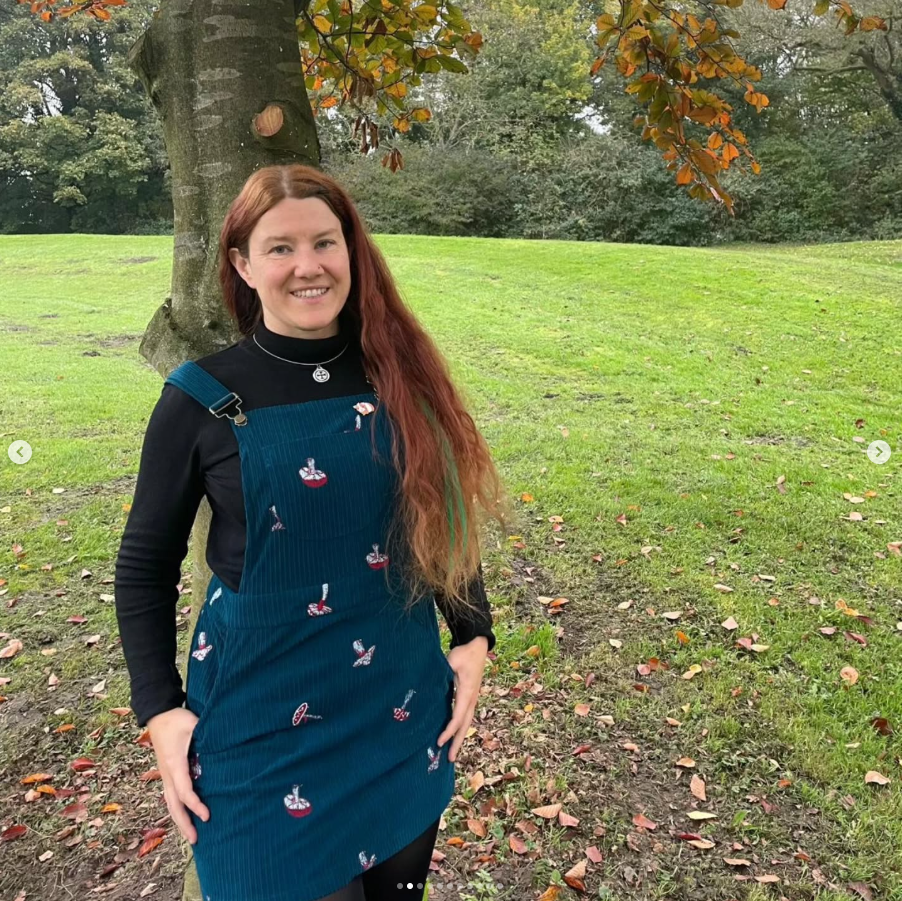
Martine was diagnosed with autism at the age of thirty. She lives in a supported flat in Utrecht with her cat, Boris. With assistance in daily life, she’s able to focus on her academic work from home as a researcher at Maastricht University, where she studies fan art. She’s a trained musician, currently writing her second book, and is known for her colourful style and deep love of Japanese culture. These days, her life is more balanced—but that wasn’t always the case.
A Rocky Road Through School
Martine’s struggles began early. “It was a very bumpy road,” she recalls. Things others found difficult often came easily to her—like music. “If I heard a song on the radio, I could immediately play it on the piano.” But the things that seemed natural to others often confused her. “If a recipe says ‘add a pinch of salt’—what’s a pinch? How should I know what that means?”
That kind of confusion is not unusual. The Autism Centre in Groningen explains that autistic people may notice details—like the phrase ‘a pinch of salt’—but interpret them differently, sometimes missing the overall context. School was especially hard for Martine. “I didn’t understand things, or I took them too literally. I eventually went to what was then called a ‘Lomschool’, now known as special secondary education.”
With support from many helpers, she completed MAVO and HAVO, but struggled again at VWO level. “I completely broke down,” she says quietly. “In the end, I took the final exams without attending classes—and passed.”
Looking back, she finds it surreal. “Given who I am, it just wasn’t possible. I couldn’t manage being in a huge building, changing classrooms and teachers every hour,” she pauses. “Everyone else could do it, so I thought I had to just do it too.” Even her family knew something wasn’t quite right. “It didn’t fit. Not really.” She went on to university hoping it would be different, but the same issues kept returning. “I used to joke: ‘If I show up at the right place at the right time with the right stuff, I’ll get a nine on the exam.’ And sometimes I did.”
A Misdiagnosis
Through her university, Martine was referred to a psychologist. “That didn’t go well. He diagnosed me with borderline personality disorder.” The diagnosis didn’t sit right with her. “It just didn’t feel true. And I couldn’t understand how he reached that conclusion.” She wasn’t allowed to question it either. “If I expressed concerns, I got a lecture about leaving things to the professionals.”
She received treatment from this psychologist—an experience she doesn’t like to speak about. “Honestly, I think I left that therapy with trauma. He misinterpreted everything through the lens of borderline.” She eventually stopped therapy, which left her feeling even worse. “I thought, ‘See, I can’t even finish therapy.’ I felt like a failure.”
A Clear Diagnosis at Last
Martine’s mother is a child psychologist, but at the time had limited experience with autism in girls. “There just wasn’t enough information available—especially about so-called high-functioning autism.” Looking back, she realises her father was likely autistic too, although never formally diagnosed. “It’s almost ridiculous we didn’t notice. He had the entire train timetable memorised,” she says with a laugh.
Her aunt Anke, also a psychologist, referred her to a psychiatrist who worked part-time with borderline patients and part-time with autistic clients. “Anke said I should talk to her—she could see what was really going on.” During their first conversation, the psychiatrist burst out laughing. “I panicked—did I say something wrong? But she laughed because it was so obvious to her.”
Martine was initially doubtful. “I thought, ‘Maybe? I’m not sure.’ I still associated autism with seven-year-old boys playing with train sets.” But after joining online support groups for autistic women, everything began to make sense. “There are millions of people like me. I had no idea.”
“Autism is a spectrum,” Martine explains. “Which means people experience it in different ways and to different degrees.” As she read the diagnostic criteria in the psychological literature, something clicked. “On a scale from one to ten, I scored a nine or ten on nearly every trait. It was so clear.”
Why did it take so long to be recognised? Martine has a theory. “I’m a woman—and I always somehow managed. With lots of help, yes, but I coped. So it went unnoticed.”
Systems and Routines
Despite the late diagnosis, Martine has developed ways to live more comfortably. Her secret? Systems and routines. “Otherwise I wouldn’t manage,” she says. “When I need to go out, I get dressed from top to bottom. I make a list of what to bring, find each item, then tick them off before I put anything in my bag.” Only after completing the routine can she relax and leave the house. “It takes a lot of time. I can’t just think, ‘Right, keys, phone, let’s go.’ I have to consciously think about every step.”
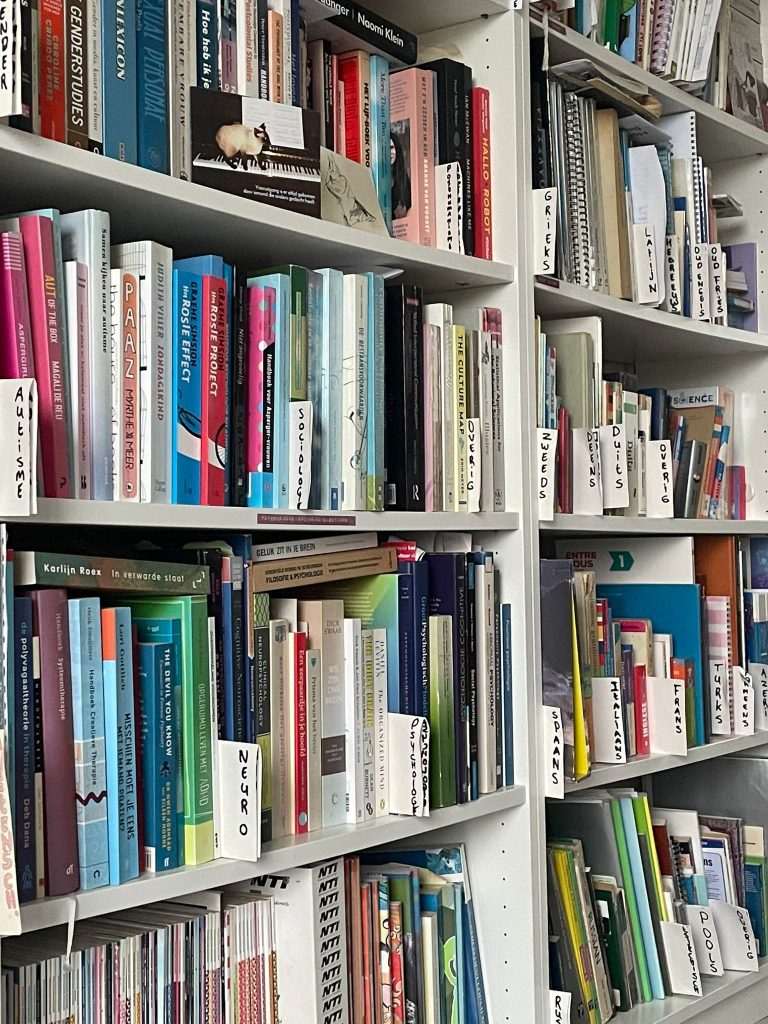
Her routine doesn’t stop there. “I also have to do my gas-check mantra. I’ve left the stove on a few times.” Martine has similar systems for everything—from organising sheet music to managing her kitchen. Her bookshelf brims with sticky notes, and she has a planning system including a master list of tasks like laundry and dishes. “Otherwise I just don’t know. I know what needs doing, but then suddenly I’ve got nothing left to wear. I’ll think, ‘Huh? Didn’t I do the laundry yesterday? Or the day before?’ I really can’t tell — turns out it was a month ago.”
To figure out which systems would work, Martine had to experiment a great deal and eventually build a fixed structure. “If there’s no structure, there’s no system — and then everything boils over.” Fortunately, she now has many working systems in place and a detailed planner. “If it works, it works. Everything just needs a fixed place, otherwise I lose everything and it’s chaos again. Luckily, this way works well for me.”
Resilience
Despite the difficult experiences, Martine is content with how her diagnostic journey has unfolded, as it made her more resilient. “Of course it’s a pity we didn’t know sooner, and that I didn’t get the right support in school because of it — but this path has shaped me into who I am now. I have a lot of resilience, and I don’t think I would have had that if I’d been diagnosed as a child.”
She’s also developed a strong sense of empathy, which helps her see and support people who fall a little more outside ‘the system’ than most.