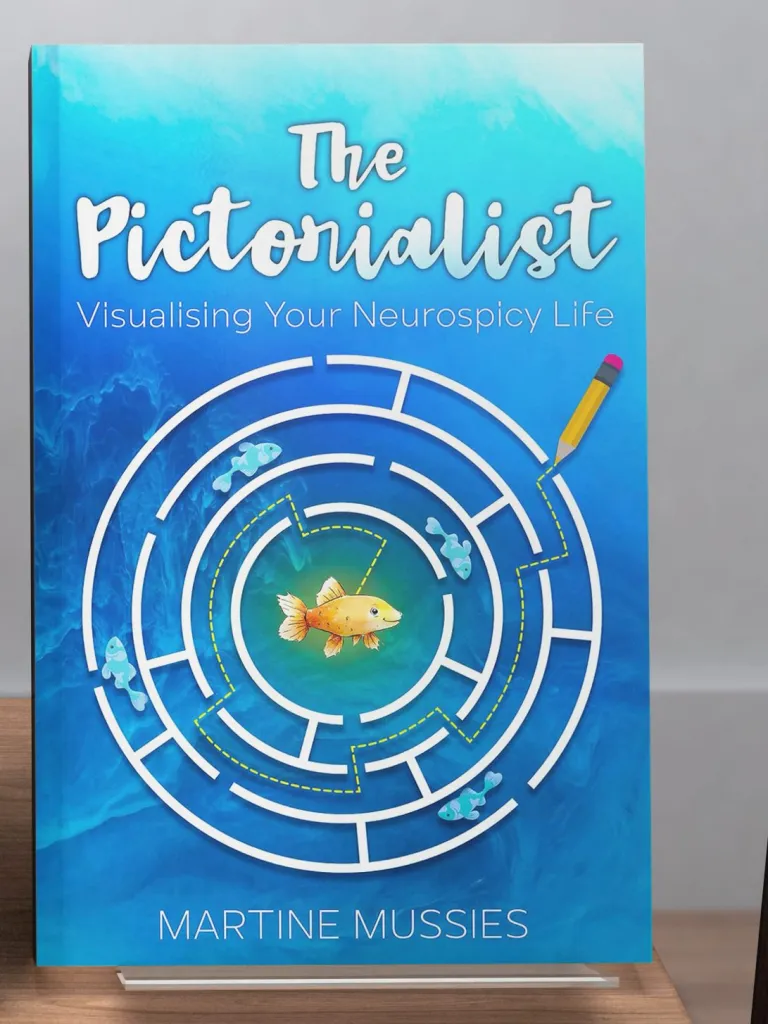
Visual thinking, autistic identity, and alternative epistemologies
The Pictorialist is my second book and a conceptual continuation of Inside the Autside, which became a bestseller among autistic and neurodivergent readers. While my first book explored autistic experience through essays, models, and theoretical reflection, this volume shifts the emphasis towards visual cognition as both method and epistemology.
The book emerged from a recurring response to Inside the Autside: readers repeatedly shared that its diagrams and visual frameworks helped them understand themselves in ways that purely textual explanations could not. The Pictorialist is my response to that insight. It takes visual thinking seriously — not as illustration or decoration, but as a legitimate mode of inquiry, sense-making, and self-knowledge.
Drawing on auti-ethnography, psychology, philosophy, and lived autistic experience, The Pictorialist brings together reflective essays and open-ended visual tools. These include mind maps, infographics, collages, and conceptual diagrams that explore themes such as autistic identity formation, sensory experience, social navigation, purpose, resilience, and meaning. Rather than offering prescriptive solutions, the book invites readers into an active process of reflection, annotation, and reinterpretation.
Visualisation, in this context, is not presented as a learning aid for “complex minds”, but as a cognitive necessity for many neurodivergent thinkers. For autistic people in particular, externalising thought can be essential for navigating abstraction, emotional complexity, and social systems. This book argues that such practices should be understood not as compensatory strategies, but as expressions of a different — and equally valid — way of thinking.
Importantly, The Pictorialist resists the demand to translate autistic experience into neurotypical norms. Many of the visual frameworks are deliberately unfinished, leaving space for bypasses, contradictions, and personal adaptations. The book positions meaning-making as collaborative and situated, rather than universal or fixed.
Written for autistic readers, neurodivergent thinkers, educators, researchers, and anyone interested in alternative forms of knowledge production, The Pictorialist offers a visual and philosophical exploration of what it means to think differently in a predominantly non-autistic world. Its aim is not to define autism, but to create space for recognition, nuance, and cognitive plurality — and to legitimise visual thinking as a serious and generative practice.
Links:
View The Pictorialist on Amazon.
Read a review of The Pictorialist.