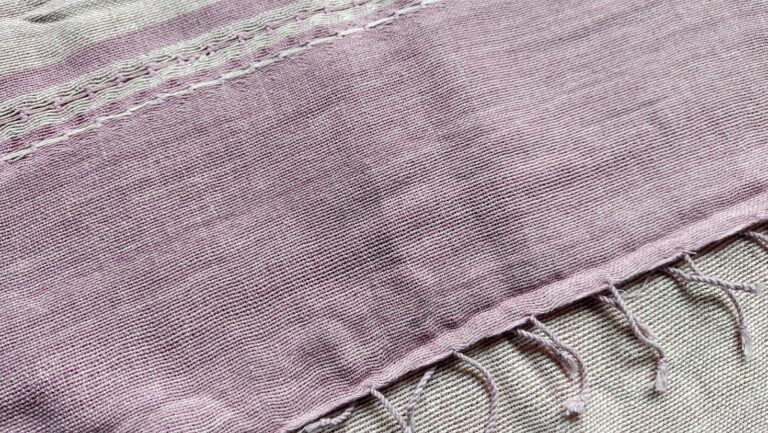
Over the recent Easter days, between liturgies sung, candles lit, and alleluias lifted, I found myself returning to my small loom. As a chorister, Holy Week is a time of both deep solemnity and overflowing joy, and amidst the beauty and the burden of sacred song, I wove a scarf for my sister.
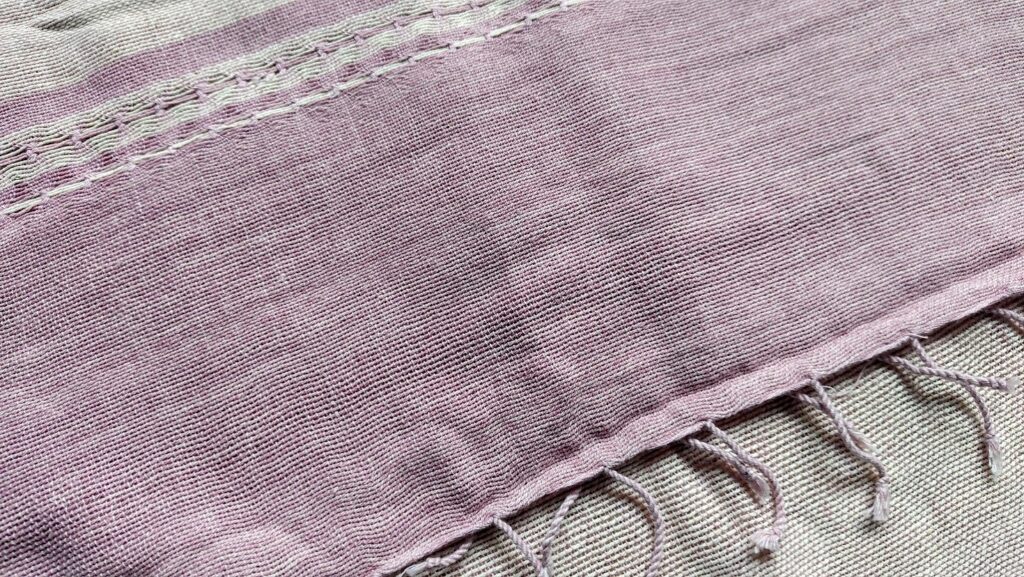
It is not a small thing to weave a scarf. To craft by hand is to slow down time, to tend to each fibre as one might tend a garden or a soul. And to weave for another is to enfold them – symbolically and literally – in a gesture of care. A scarf is care made visible, just as Mary wrapped her newborn son in swaddling cloth and laid him in a manger (Luke 2:7). Softness becomes sanctuary. Fabric becomes affection.
For me, this scarf is religious (fe)mail art: feminist, faith-infused, and sent across space as a textile epistle of sisterhood, solidarity, and presence. In its most basic function, a scarf is a garment of warmth and protection. But symbolically, it carries far more. In the biblical imagination, garments are rarely neutral: mantles signal calling, veils conceal and reveal, robes embody both dignity and shame.
We recall the woman who reached for the hem of Christ’s garment, believing in its healing power (Luke 8:43–48). Joseph’s many-coloured coat, steeped in dream and destiny (Genesis 37). The temple veil, torn at the hour of death (Matthew 27:51). And at Easter, we are invited to meditate on one of the quietest, most poetic resurrection signs: folded cloth in the empty tomb (John 20:6–7). Set aside, not discarded, like a final act of care in a world being made new. This scarf, too, is folded cloth in an age of unraveling.
As I wove, Psalm 23 hummed softly in the background, that pastoral balm for the weary: “He makes me lie down in green pastures. He leads me beside still waters. He restores my soul.” To offer a scarf is, in some quiet way, to offer a portion of that green pasture, something soft and grounding, something to wrap around weary shoulders like grace itself.
In weaving, I find something akin to prayer. Each movement of shuttle and thread echoes the rhythms of chant and psalm. Each row speaks of comfort, belonging, protection. In this way, my little loom becomes my liturgy.
This particular scarf was made with ecological intention. Every material was chosen with a heart for our planet: vegan, organic, and ethically sourced. Dyed with plant-based pigments, woven slowly by hand. It is an act of stewardship, a witness to the belief that beauty must walk gently on this earth. A timeless object, lovingly made, embodying the dignity of both creation and creator.
To send it is to send warmth, but also witness. To wrap it around a beloved neck is to say:
you are held, even across distance.
You are remembered.
You are worth the slow time of handwork, the gentleness of fibre, the fierce love of resurrection faith.
Surely goodness and mercy shall follow us all the days of our lives,
and we shall dwell in the house of the Lord forever.