As you may know, I serve as music librarian for the Domcantorij (the choir & orchestra of the Dom church in Utrecht). It’s wonderfully varied work. One week I’m writing in Japanese to a choir library in Tokyo. The next, I’m conducting a theological discussion in Russian with a Ukrainian conductor now based in America. The week after that, I’m creating a new version of a Charpentier mass in my notation software because we need to transpose it to match our organ (or rather, to align with the basso continuo). It’s tremendously engaging work, and I experience what disability studies scholar Mia Mingus calls “access intimacy“, that recognition when accommodation isn’t a burden but a collaboration. I assist our cantor with programming, which is one of the most rewarding aspects of my role. But there is one question that continues to trouble me: the programming of Russian music.
The Stain
In her book Monsters: A Fan’s Dilemma, Claire Dederer writes about “the stain”: the contamination that can attach itself to art we love. While Dederer grapples with the personal transgressions of artists (from Richard Wagner to Michael Jackson), I have been wrestling since February 2022 with the Russian classical repertoire itself.
This wrestling intensified when I read Rutger Helmers’ recent essay in Preludium, “How Can I Still Write About Russian Music?” Helmers, also a musicologist, articulates a deep unease that many of us feel: music to which we have devoted energy, which we have studied and performed with pleasure, has become a source of profound discomfort.
Russia’s invasion of Ukraine has transformed Russian music into something more than art. It has become, in Helmers’ analysis, an instrument of propaganda. The example he gives is chilling: in September 2022, the Kremlin Orchestra performed Tchaikovsky’s Fourth Symphony before the damaged façade of the Mariupol theatre — the same building where hundreds of civilians had sought shelter, where “CHILDREN” (ДЕТИ) was written in enormous letters in Russian to protect those inside, and which was nevertheless bombed, according to Amnesty International, deliberately.
“May we endure these trials and see each other more often in the theatre,” the Russian organiser told Mariupol’s residents via Rossiyskaya Gazeta. “Russian culture lives in our hearts. And today Russian music sounds in Russian Mariupol.”
High culture deployed to obscure — even to justify — the barbarity of war. As Ukrainian musicologist Olena Kortsjova has observed, a “great” Russian composer like Tchaikovsky has devolved into “a brand of Putin and the Soviets,” systematically performed as a symbol of “the greatness, sublimity, spirituality and humanism of the so-called ‘Russian world’.”
The Philosophical Problem: Identity and Violence
Yet I find myself resisting the logic that follows from this analysis. Recently, I watched a documentary about the systematic collection and destruction of Russian books in Ukraine. It was both comprehensible and horrifying. I understood the impulse — and recoiled from the act.
This tension points to something fundamental: anything pursued to its logical conclusion becomes violent. Identity itself, perhaps, is a dangerous idea. What is identity, after all, but a mechanism for determining who belongs and who does not? Life, I increasingly believe, is endless variation on sameness — not rigid categories of Self and Other.
The Mariupol theatre demonstrates this paradox perfectly. Russia denies Ukrainian identity exists — Ukrainians are merely Russians who have forgotten themselves. In response, Ukraine must assert its identity precisely by excluding Russian culture. Both positions operate within the same logic: identity as exclusion. The victim reproduces the logic of the oppressor. The liberation struggle becomes itself a form of violence.
The Theological Challenge
Another alto in our choir recently posed a question that goes to the heart of this dilemma: “Isn’t it also the task of the church to remind people gently of the shared humanity of their enemies?”
She is right, of course. Theologically, her position is impeccable, standing in the tradition of Desmond Tutu, Gandhi, and Martin Luther King. “Love your enemies.” “Separate the deed from the doer.” “Pray for Putin.” The principle is sound. We must not create Unmenschen — non-humans. We must resist dehumanisation, even, no: especially, of those who commit atrocities. But here is where I stumble: there is a difference between abstract ethics and concrete ethics.
Consider a parable. Someone’s house is being burgled. An intruder is attacking their family, setting their home ablaze. As they fight for their lives, the minister says: “Remember the shared humanity of the burglar.” Technically, the minister is correct. But is this the moment for that message? Or should the minister first help stop the burglar, and only later speak of reconciliation?
Demanding reconciliation without first securing justice is what Dietrich Bonhoeffer called “cheap grace” (billige Gnade), a forgiveness that costs nothing because it demands nothing of the powerful.
Why We Continue to Programme Russian Music
Which brings me back to the question: why does the Domcantorij continue to programme Russian music? Not because we are indifferent to Ukrainian suffering. Not because we believe “art transcends politics” — a comfortable fiction. We continue because we believe music can be a bridge, but only if we are intentional.
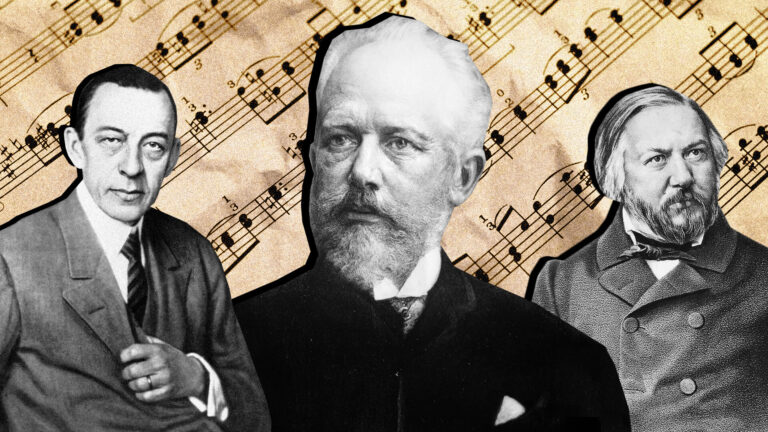
- Music belongs to humanity, not to regimes Rachmaninoff, Tchaikovsky, Shostakovich — these belong to human culture, not to Putin. By continuing to perform this music, we refuse to cede it to the Kremlin’s narrative. We reclaim it from being a “brand” of the state.
- We honour Russian dissenters Thousands of Russians oppose this war. Many have fled, at great personal cost. By honouring their cultural heritage, we stand with them, not with their government. We remind them that “Russian” does not mean “Putin supporter.”
- We acknowledge complexity Not all Ukrainians want Russian music banned. There are Ukrainians who grew up loving Tchaikovsky and Russians who fled Ukraine when the war began. Reality resists our categories.
- Not without context We do not programme Russian music as though nothing has happened. We:
- Include Ukrainian composers in our programmes.
- Provide contextualisation in our concert notes.
- State clearly our solidarity with Ukraine.
- Remain open to changing course if circumstances demand it.
The Tension Remains
I do not pretend to have resolved this dilemma. Our safety here in the Netherlands affords us the luxury of nuance. We can contemplate cultural bridges precisely because we are not under bombardment. That very privilege should make us humble about what we ask of those who are.
Helmers writes that he can no longer write about Russian music “without taking the whole uncomfortable picture into account, stain and all.” I find myself in a similar position. The music itself is not guilty. But our unreflective relationship with it can be.
So we continue to sing Russian music in the Domcantorij. Thoughtfully, contextually, and with awareness. We do so not out of moral certainty, but out of a commitment to navigate these impossible questions as responsibly as we can.
And we remain open to being wrong.